Showing posts with label Politician. Show all posts

Chris Christie Biography Current News Profile Fat Weight Girl Friend Wife Children Nude Relationships Imdb Family Pictures Wallpaper Online Video.

Chris Christie Biography Current News Profile Fat Weight Girl Friend Wife Children Nude Relationships Imdb Family Pictures Wallpaper Online Video.

Christopher James "Chris" Christie (born September 6, 1962) is the 55th and current Governor of New Jersey. Upon his election to the governorship in November 2009, Christie became the first Republican to win a statewide election in New Jersey in 12 years. Christie, an attorney, previously served as United States Attorney for the District of New Jersey.

Early life and family
Chris Christie was born in Newark, New Jersey, the son of Sondra A. (née Grasso) and Wilbur James "Bill" Christie, a certified public accountant.Christie is of Irish and Sicilian descent.He was raised in Livingston, graduating from Livingston High School.Christie graduated from the University of Delaware with a Bachelor of Arts degree in Political Science in 1984 and Seton Hall University School of Law with a Juris Doctor degree in 1987. Christie was admitted to the Bar of the State of New Jersey and the Bar of the United States District Court, District of New Jersey, in December 1987.

In 1986, Christie married Mary Pat Foster, a fellow student at the University of Delaware. After marriage they shared a one-room apartment in Summit, New Jersey. Mary Pat Christie pursued a career in investment banking, eventually working at the Wall Street firm Cantor Fitzgerald. She left the firm in 2001 following the September 11 attacks, only recently returning to work part-time.They have four children, Andrew (born 1993), Sarah (born 1996), Patrick (born 2000), and Bridget (born 2003).Christie and his family reside in Mendham Township.

Achievements
Despite the initial misgivings over his degree of experience, Christie received praise for his history of convictions for public corruption. During his tenure, Christie's office won convictions or guilty pleas from 130 public officials, both Republican and Democratic, on the state, county and local levels without losing a single case.The most notable of these convictions included those of Hudson County Executive Robert C. Janiszewski in 2002 on bribery charges,Essex County Executive James W. Treffinger in 2003 on corruption charges,former New Jersey Senate President John A. Lynch, Jr. in 2006 on charges of mail fraud and tax evasion,State Senator and former Newark mayor Sharpe James in 2008 on fraud charges,and State Senator Wayne R. Bryant in 2008 on charges of bribery, mail fraud, and wire fraud.

Claims of partisan attacks
Christie has been criticized for subpoenaing Senator Robert Menendez during his contested 2006 campaign, just two months before the election.Christie's aides have insisted that they initiated the action in response to an article that appeared in The Record, which reported that in 1994, when Menendez was a U.S. Representative, he had leased his former home to a social service agency that he had helped obtain federal financing.The non-profit group paid Menendez more than $300,000 over nine years to rent the building. Menendez claims to have cleared the arrangement with the Congressional ethics office, a step that had also been reported previously by New Jersey newspapers.According to Menendez, just prior to signing the rental lease, he cleared it by phone with a lawyer on the staff of the United States House Committee on Standards of Official Conduct. Following the subpoena, the lawyer, who no longer works with the Committee, came forward to say that while she doesn’t recall the conversation, it probably happened—and that if she were advising Menendez now she would tell him, as she apparently did then, that there was nothing improper about the arrangement.As of August 2009, nothing has come from the investigation.

2012 presidential speculation

Christie has been the subject of ongoing speculation that he may attempt a run for President of the United States in 2012. He consistently denied any interest in launching a presidential bid. In September 2011, a number of press stories cited unnamed sources indicating Christie was reconsidering his decision to stay out of the race; an Associated Press story dated September 30, 2011, indicated a decision on whether or not he would run for president in 2012 would be made "soon".

Huma Abedin Biography Current Hot News Profile Boy Friend Children Relationships Imdb Husband Family Pictures Wallpaper Online Video.

Full Name : Huma Abedin
Born : 1976
Husband : Anthony Weiner

Profile Of Huma Abedin :
Huma Abedin (born 1976) is the longtime aide of Hillary Clinton. She has been working for Hillary since 1996. Abedin married Congressman Anthony Weiner in July 2010. Find more Huma Abedin pictures, news and information below.huma abedin wedding huma abedin anthony weiner huma abedin vogue.

By all accounts, Huma Abedin, the wife of Rep. Anthony Weiner (D-New York), has been unwittingly pushed into the spotlight following her husband's admission on Monday that he sent lewd photos to women he had met online.Abedin, who's 35, was noticeably absent at the press conference when a tearful Weiner, 46, confessed to the inappropriate relationships but also said that he and his wife "have no intention of splitting up over this."

Huma Abedin, Anthony Weiner

So just who is Huma Abedin? Known as "Hillary Clinton's secret weapon," Abedin began working for the secretary of state as an intern in 1996, before the first lady herself became a focus of attention as a bystander in the Clinton-Lewinsky sex scandal.Since then, the Michigan-born but Saudi Arabia-raised Abedin has ascended the ranks, with positions as a personal aide and advisor to then Senator Clinton as well as “traveling chief of staff” during her presidential campaign.

Huma Abedin, Anthony Weiner

She currently serves as a deputy chief of staff to Sec. Clinton. She was named this past fall to Time magazine's "40 Under 40" list of New Civic Leaders, where the profile referred to her as Hillary Clinton's "shadow."

Huma Abedin, Anthony Weiner

Abedin, who speaks Arabic fluently (her father, who passed away in 1993, was of Indian descent and her mother, a professor in Saudi Arabia, is from Pakistan), is a practicing Muslim.

Huma Abedin, Anthony Weiner

Her husband, who's Jewish, has been known to fast with her during Ramadan.She's also known for her impeccable style, favoring designers like Marc Jacobs and Prada. Oscar de la Renta, a friend, designed her dress for her wedding to Rep. Weiner last summer.

Huma Abedin, Anthony Weiner

In a 2007 New York Observer profile (it should be noted that Abedin declined to be interviewed for it) then Hillary Clinton press secretary Philippe Reines called Abedin "one in a million," but conceded "that would mean there are 5,999 others in the world just like her, and there simply aren’t."

Huma Abedin, Anthony Weiner

Huma M. Abedin (born 1976) is an aide to United States Secretary of State Hillary Rodham Clinton who served as traveling chief of staff and "body woman" during Clinton's campaign for the Democratic nomination in the 2008 presidential election.

Huma Abedin, Anthony Weiner

Abedin was born in Kalamazoo, Michigan. Her Indian born father was an Islamic and Middle Eastern scholar who died when she was 17 years old, and her Pakistani born mother is a professor in Saudi Arabia.At the age of two, her family relocated to Jeddah, Saudi Arabia. Abedin returned to the United States to attend George Washington University.

Huma Abedin, Anthony Weiner

Huma Abedin began working as an intern for the White House in 1996 and landed an assignment with the First Lady. She has since risen to the role of Hillary Clinton's right-hand woman. She currently works for Clinton at the State Department.She is currently dating Rep. Anthony Weiner.

Arnold Schwarzenegger's mistress speaks out about Gigi Goyette

It was back in 2001 when Gigi Goyette was paid $20,000 to not talk about her supposed affair with Arnold Schwarzenegger. Now, since it was recently discovered that the “Kindergarten Cop” actor not only had an affair while married to Maria Shriver, but had a son as well, Gigi’s story is back in the news.

Arnold Schwarzenegger, Gigi Goyette

Talking with Extra, Miss Goyette dished about her encounter with the former Governor of California while also apologizing to Miss Shriver, saying, "I am very sorry for the mistakes I made in the past and for being intimate with your husband, and I would hope that you would forgive me for that."

In response, Schwarzenegger's attorney, Marty Singer, told People Magazine, "This woman recently sold at least four stories to the tabloids relating to my client."

Arnold Schwarzenegger, Gigi Goyette

The rep also added, "She's just a person who wants to make money selling stories. Her actions speak for themselves."

Goyette's lawyer, Gloria Allred, says the reason her client is coming forward now "is to set the record straight about the nature of her relationship with Arnold."

Arnold Schwarzenegger, Gigi Goyette

According to Allred, Goyette's relation with Schwarzenegger began when the actress was 17 years old and continued, with extended hiatuses, until 2000 or 2001.

Arnold Schwarzenegger, Gigi Goyette

Arnold Schwarzenegger, Gigi Goyette

Public numb to political scandals, Arnold Schwarzenegger & Gigi Goyette then Mildred Baena

It's already old news that Arnold Schwarzenegger fathered a child with a former housekeeper while he was married to Maria Shriver. The two are now estranged, and Shriver is filing for divorce. For now, the affair of the action-hero turned Republican California governor reads more like a Hollywood scandal than a political one. It's mostly being covered by the entertainment media outlets, as opposed to the news channels and websites. That might be because Schwarzenegger is out of office, or it might be because consumers of news don't care.

Arnold Schwarzenegger, Gigi Goyette, Mildred Baena

Schwarzenegger's dalliances are but the latest in a long string of indiscretions by politicians that leave the public numbed, even among many partisans who keep a running scorecard of who did what to whom.

Political and sex scandals involving politicians are nothing new in American politics. They go back to earliest days of the republic. The old political stories played out through the years with predictable outcomes.

Presidential candidate Gary Hart's affair back in the 1980s made front-page news and sank his chances at the White House. President Bill Clinton's outrageous conduct with a White House intern nearly sank his presidency and introduced new slang to the American dictionary.

Arnold Schwarzenegger, Gigi Goyette, Mildred Baena

Through the years, there have been so many trysts from members of Congress, presidential candidates and even presidents that it has become mundane. Today's 24-hour news cycle adds only to scandal fatigue.

Are scandals news? Yes, but the redundant telling of the same story has desensitized us to the reports and skewed the light in which these scandals should be viewed. Marital infidelities are one of the first spades turned when journalists vet candidates.

Arnold Schwarzenegger, Gigi Goyette, Mildred Baena

Most certainly, political candidates should be vetted. The public should know what kind of person they might vote for, especially if that candidate espouses "family values." But fidelity is only one criteria to profile a candidate, and a comprehensive vetting shouldn't become fixated exclusively on lewd conduct, as it seemed to do in 1992 presidential race.

The prying and vetting of candidates' personal lives probably keeps many good, honorable would-be candidates from ever running for office. On the other hand, not enough probing might allow a flawed candidate to ascend to office where he can abuse the public's trust as much as he abused his spouse's.

Arnold Schwarzenegger, Gigi Goyette, Mildred Baena

Schwarzenegger, John Edwards, et al, made their proverbial bed. Let them lie in it. As for the lewd specifics, well, it's there for those who have an interest in following such stories. As for many of us, we're just numb to them.

Arnold Schwarzenegger 'mistress' claims Gigi Goyette was just one of many women who shattered his 25-year marriage

After announcing his separation from wife Maria Shriver this week, a woman has alleged she was just one of many mistresses that shattered Arnold Schwarzenegger’s 25-year marriage. The 63-year-old Terminator actor denies an affair with Gigi Goyette, but the 52-year-old woman has said: ‘There were so many other women. About 13 have come out of the woodwork.’ She claims she met Schwarzenegger in 1975, when she was a 16-year-old child actress on Little House On The Prairie.

arnold schwarzenegger, gigi goyette, maria shriver

Gigi claims that she slept with the star once in that year but did not see him again until 1989, during which year they began their alleged fling – three years after Schwarzenegger married Shriver, 55. But Gigi told the Daily Mirror: ‘I don’t think I had anything to do with the break-up of his marriage.’

Goyette, who is now an estate agent in Malibu, told the tabloid: ‘Maria Shriver is a Kennedy so I think that, like a good Kennedy, she decided to ignore what was happening.’ Gigi also claims she spoke to Schwarzenegger on Wednesday, after he announced the split from Shriver. She said: ‘He was lovely. He asked me how I was doing. We had a really nice conversation. It felt like old times.’ Reports of the former child actress having an alleged affair with Schwarzenegger first surfaced in 2001.

And in 2005, The Los Angeles Times reported that two days after Schwarzenegger announced his campaign for governor in August 2003, American Media had paid Gigi $20,000 to keep silent about her relationship with him. Also in 2003, Schwarzenegger's campaign was rocked by the 'Gropegate' scandal - allegations from six women who said he had groped them on movie sets, in studio offices and in other settings over the past three decades, without their consent.

arnold schwarzenegger, gigi goyette, maria shriver

In a series of interviews with the Los Angeles Times, three of the women claimed Schwarzenegger grabbed their breasts, while a fourth said he reached under her skirt and touched her buttocks. A fifth woman said Schwarzenegger groped her and tried to remove her bathing suit in a hotel elevator and a sixth accused him of pulling her onto his lap and asking if a certain sexual act had ever been performed on her.

Schwarzenegger's campaign spokesman, Sean Walsh, immediately responded by saying the allegations were untrue, and insisted they were part of an effort to undermine the Republican. A 1977 magazine interview also surfaced in which he discussed attending orgies and using marijuana. Schwarzenegger admitted he ‘behaved badly sometimes,’ adding an apology, saying: ‘I have done things that were not right, which I thought then was playful.’

Meanwhile, the Predator star was spotted riding his bike around Santa Monica yesterday without his wedding ring. The former California governor thanked friends and family for an outpouring of support this week and speaking on Tuesday night at a Los Angeles event, he said he and his wife ‘both love each other very much’ and ‘are taking one day at a time’. The two issued a joint statement on Monday saying that they were living apart as they work on the future of their relationship and continue to parent their four children.

In his speech Schwarzenegger said: 'I want to take a moment and thank our many friends and family for the tremendous amount of support and love that you have given us in the last 24 hours.

arnold schwarzenegger, gigi goyette, maria shriver

'I just spoke to Maria an hour ago before I came here. 'We both were saying the same thing - we're extremely blessed to be surrounded by so many wonderful people, by so many wonderful friends. ‘We both love each other very much. We're very fortunate to have four extraordinary children. And we're taking it one day at a time.

'The bottom line is we want to thank all the people for their great, great support.'

arnold schwarzenegger, gigi goyette, maria shriver

Since news of his separation from 55-year-old Shriver, sources have claimed it was a long time coming. It is claimed she was 'miserable' in her marriage for several years and had complained about her actor husband's ego.

The couple have four children together, aged 14 to 21, and their son Patrick,17, thanked his Twitter followers this week for their kind words.

He wrote: 'Appreciate all your messages. Small speed bump in life, luckily we own hummers, we will cruise right over it. All will be okay. #peace.' The couple's joint statement said: 'This has been a time of great personal and professional transition for each of us.

arnold schwarzenegger, gigi goyette, maria shriver

'After a great deal of thought, reflection, discussion and prayer, we came to this decision together. 'At this time, we are living apart while we work on the future of our relationship.' ‘We are continuing to parent our four children together. They are the light and the center of both of our lives. 'We consider this a private matter and neither we nor any of our friends or family will have further comment. We ask for compassion and respect from the media and the public.’

Charlie Rangel Biography and Full Profile

New York Congressman and Harlem native Charlie Rangel was born in New York on June 11, 1930. Raised by his mother and maternal grandfather, an elevator operator, Rangel grew up in the streets of New York. After dropping out of high school, Rangel served in the U.S. Army during the Korean War, where he was seriously wounded in battle and received the Bronze Star and Purple Heart.
 
After his return from Korea and near-death experience, Rangel enrolled at New York University, earning a B.A. in 1957 and receiving his law degree from St. John's University Law School in 1960. In 1961, Attorney General Robert Kennedy appointed Rangel assistant U.S. attorney for the Southern District of New York. In 1967, Rangel won election to the New York State Assembly, and in 1971 he ran against the famous Reverend Adam Clayton Powell, Jr. in a historic election. Rangel's victory inaugurated the first of his seventeen consecutive terms as Harlem's representative to Congress.

His tenure in Congress has been marked by a continued activism and concern for his constituency. Rangel was one of the founding members of the Congressional Black Caucus and served at one time as its chairman. He has also been active on issues of trade and human resources. In 1987, Rangel, one of the leading opponents to South African apartheid, pushed the Internal Revenue Service to eliminate tax credits for taxes paid to the apartheid government of South Africa. In 1995, he helped to create a federal "empowerment zone" in Manhattan and authored the low-income tax credit to stimulate the development of affordable housing in urban areas. Early in 2003, Rangel proposed the reinstatement of the military draft as a way to deter the use of force and promote a peaceful resolution to the standoff in Iraq.
 
Rangel and his wife, Alma, have two children, Steven and Alicia. The Rangels, active still in many civic and community organizations, maintain their home in Harlem.

Politician. Born Charles B. Rangel on June 11th, 1930, in New York City. Rangel's mother, Blanche Mary Wharton, was only 16 years old when she met Ralph Rangel, a Puerto Rican immigrant who was working as a handyman for Wharton's family. The couple eloped and, three years later, Charles' eldest brother, Ralph, was born. Charles was born seven years later, but by then his eldest brother had been taken in by relatives and was rarely around. Rangel's sister, Frances, who was born three years later, would also come to be raised by relatives.

Rangel's early family life was tumultuous; his father rarely held a job, and physically abused Charles' mother. "My father was absolutely no good," Rangel says. "In my earliest memory of him...my father was hitting my mother on the steps of some apartment-type building." Rangel's father left the family when Charles was six years old.

Charles' relationship with his mother was far different, however--he describes most of his early life as "always around her apron strings." Unlike his siblings, Rangel often followed his mother around during her transient lifestyle. He traveled with her to jobs as a seamstress and maid, and moved with her as she found new romantic interests.Rangel was eventually sent to live with his aunt and uncle in the Bronx. He credits his relatives with giving him good study habits and structure. "I had enough going for me, in terms of confidence and good work habits, that studying really was no big deal," Rangel says.

The return to his mother's home, however, pushed the young man out of the house at an early age. "I was torn between life tied to my mother and being on my own," Rangel explains. "I knew I had to get out." Although his performance in grade school and at DeWitt Clinton High School was excellent, he was often truant during this time, and was occasionally driven home by the police for his antics. He dropped out of school in 1947 to sell shoes, and drifted aimlessly until he enlisted in the U.S. Army a year later.

Rangel was stationed in Korea during the Korean War, and it was in the military that his talents truly shone. As a soldier, he was a member of the all-black 503rd Field Artillery Battalion in the 2nd Infantry Division. Though only a private first class, he was often recognized for his strong sense of leadership.

This ability was put to the test in November of 1950, during the Battle of Kunu-ri. Despite shrapnel wounds, Rangel led 40 of his comrades for three days behind enemy lines rather than surrender. He was later recognized for his bravery with the Purple Heart, a Bronze Star, a Presidential Unit Citation, the Republic of Korea Presidential Unit Citation, and three battle stars. "Since Kunu-ri ," Rangel says, "I have never, never had a bad day."

After an honorable discharge from the Army, Rangel returned home a changed man. He decided to finish high school, completing two years of studies in only one year. He earned his G.E.D. in 1953, and went on to attend the New York University School of Commerce. There he used his military benefits to finance a four-year degree, which he earned in three years, while also making the dean's list. Charles Rangel (Charles Bernard Rangel) was born on Wednesday, June 11, 1930 in New York City and he is a famous politician from United States of Roman Catholic religion.
 
Life in Brief:
- Being born on Jun 11, Charles is a Gemini.
- his ethnicity: Black.
- his mother's name: Blanche Mary Wharton.
- his father's name: Ralph J. Rangel.
- Brother : Ralph J. Rangel.
- Sister : Frances.
Charles Rangel had studied at DeWitt Clinton High School, New York, NY and then he attended the BS, School of Commerce, New York University (in 1957).Charles dated Alma E. Carter (wife).

Sarah Palin Profile and Full Biography

Sarah Palin Profile - Biography of Sarah Palin
Sarah Palin is pro-life, pro-marriage, pro-gun and supports oil drilling both offshore and in ANWR. She has publicly questioned whether global warming is man-made.Her husband, Todd Palin, is an Alaska native whose grandmother was raised in a traditional Yup'ik Eskimo house. Employed for two decades in the oil industry, Todd is a production operator, a member of the United Steelworkers, a commercial fisherman, and a four-time winner of the Iron Dog snowmachine race (along the famous Iditarod Trail.) His wife has been known to call him "first dude."
Sarah's political views are consistent with her conservative Christian beliefs. The mother of four when she became governor in 2006, in December 2007 she was pregnant with her fifth child when prenatal testing revealed Down syndrome.A member of Feminists for Life, Sarah did not consider abortion. She gave birth to Trig Paxson Van Palin on April 18, 2008; Trig is Norse and means "true" and "brave victory," and Paxson is a region in Alaska the couple favors. (Van Palin is a nod to the rock group Van Halen.)

The other Palin children have equally unique names. Son Track (18) is in the Army and will deploy to Iraq. Daughters, Bristol (17), Willow (13) and Piper (7) are in public schools.The Anchorage Daily News has called

Sarah Palin "the Joan of Arc of Alaska politics" and " one of the most popular local politicians in America." Anchorage radio host Dan Fagan says, "She's a hockey mom, she lives on a lake, she ice fishes, she snowmobiles, she hunts...she has a float plane," and in his opinion, "she's as Alaskan as you can get."
 
Politician. Born Sarah Louise Heath on February 11, 1964, in Sandpoint, Idaho. At the age of three months, she moved to Alaska when her parents came to teach school in Skagway in southeast Alaska. Sarah Palin's father, Charles, was a science teacher and track coach.

Her mother, Sally, was a school secretary.Sarah Palin grew up in the small town of Wasilla, about 40 miles north of Anchorage. In 1982, she played on Wasilla High School's state champion girls' basketball team, picking up the nickname "Sarah Barracuda" for her intense playing style.

After graduating from Wasilla High in 1982, Sarah Palin wore the crown of Miss Wasilla in 1984 and was the runner-up in the Miss Alaska contest. She went on to earn a bachelor's degree in journalism from the University of Idaho in 1987. She also became a television sports reporter in Anchorage.An outdoors enthusiast, Palin is a lifetime member of the National Rifle Association.

She is an avid hunter, eats moose hamburger and rides snowmobiles.Palin eloped with her high school sweetheart, Todd Palin, on August 29, 1988, and helped run his family's commercial fishing business. Todd, who is part Yu'pik Eskimo, also worked for BP at a Prudhoe Bay processing facility. He took leave from the company when his wife became governor to avoid a potential conflict of interest.
Affectionately referred to as Alaska's "First Dude," Todd is also a four-time champion of the Iron Dog, the world's longest snow machine race. From 1995 to 2002, he was a member of Alaska's Independence Party, a fierce states' rights group that wants to turn all federal lands in Alaska back to the state. Some party leaders have advocated Alaskan secession from the United States.Palin and her husband have five children: Bristol (who is 17-years-old and expecting a baby with boyfriend Levi Johnston, a hockey player at Bristol's high school), Willow, Piper, Track (who is in the U.S. Army and was deployed to Iraq on September 11, 2008) and Trig (who was born in April 2008 with Down syndrome).

Palin entered politics in 1992, winning a seat on the Wasilla City Council by opposing tax hikes. Four years later, she was elected mayor of Wasilla by knocking off a three-term incumbent.As mayor, Palin cut property taxes and reduced spending.

She also raised the city sales tax by a half a percent to build a popular sports complex and put more money into public safety.Mayor Palin also effectively used the system of congressional earmarks. She collected $26.9 million in such funding, according the independent watchdog group Taxpayers for Common Sense, including $15 million for a commuter rail project.

Palin ran her first statewide campaign in 2002 in a bid for the Republican nomination for lieutenant governor. She lost by fewer than 2,000 votes.Alaska Governor Frank Murkowski appointed Sarah Palin to chair the state's Oil and Gas Conservation Commission in 2003. She resigned a year later in protest over what she perceived to be the "lack of ethics" of fellow Alaskan Republican leaders, including Republican Party Chair Randy Ruedrich.

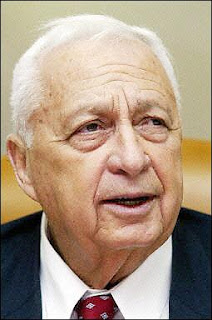
Ariel Sharon Profile and Full Biography

Name : Ariel Sharon
Born: 26 February 1928
Birthplace: Kefar Malal, Palestine
Best known as: Prime minister of Israel, 2001-2006

 Ariel Sharon Profile and Full Biography
Ariel Sharon was prime minister of Israel from 2001 until 2006, when a massive stroke ended his political career. Sharon already had a long history of service in Israel's military and government: he was active in all of the Israeli-Arab wars, rising to the rank of major general by 1967 and distinguishing himself as a strategist in the Six-Day War of 1967 and the Yom Kippur War of 1973. The same year he helped form the Likud party, and in 1974 he was elected to his first term as member of Israel's parliament, the Knesset. Sharon served as minister of agriculture and then minister of defense under Menachem Begin, and led the Israeli invasion of Lebanon in 1982. When hundreds of Palestinian refugees were murdered by Lebanese Christian militiamen, Sharon was severely criticized and forced to resign his position. He remained in the cabinet, however, and served as minister of national infrastructure under Benjamin Netanyahu. In 1998 Sharon was named minister of foreign affairs. Sharon capped his political comeback by winning election to the post of prime minister in February of 2001, unseating Ehud Barak in a landslide. On 4 January 2006, Sharon suffered what was described as a "significant" stroke with "massive bleeding" in his brain, just three weeks after a mild stroke put him briefly in the hospital. The stroke left him comatose, and he was replaced by acting prime minister Ehud Olmert.
 
Extra credit: In November of 2005, Sharon resigned from the Likud party, asked that the current parliament be dissolved, and announced he would form a new centrist party called Kadima, the Hebrew word for "forward." Kadima won 28 seats in Israeli general elections of March 2006, making Ehud Olmert the new prime minister-designate... Israel's cabinet declared Sharon officially "permanently incapacitated" in April of 2006... Sharon's birthplace, Kefar Malal, can also be spelled Kfar Malal.

Ariel (“Arik”) Sharon was born at Kfar Malal on February 27, 1928. He served in the IDF for more than 25 years, retiring with the rank of Major-General. He holds an LL.B in Law from the Hebrew University of Jerusalem (1962).

He joined the Haganah at the age of 14 in 1942. During the 1948 War of Independence, he commanded an infantry company in the Alexandroni Brigade. In 1953, he founded and led the “101” special commando unit which carried out retaliatory operations against Palestinian fedayeen. Sharon was appointed commander of a Paratroop Corps in 1956 and fought in the Sinai Campaign. In 1957, he attended the Camberley Staff College in Great Britain.

During 1958-62, Sharon served as Infantry Brigade Commander and then Infantry School Commander, and attended Law School at Tel Aviv University. He was appointed Head of the Northern Command Staff in 1964 and Head of the Army Training Department in 1966. He participated in the 1967 Six Day War as commander of an armored division. In 1969 he was appointed Head of the Southern Command Staff.

Sharon resigned from the army in June 1972, but was recalled to active military service in the 1973 Yom Kippur War to command an armored division. He led the crossing of the Suez Canal which helped secure an Israeli victory in the war and eventual peace with Egypt.

Ariel Sharon was elected to the Knesset in December 1973, but resigned a year later, serving as Security Adviser to Prime Minister Yitzhak Rabin (1975). He was elected to the Knesset in 1977 on the Shlomzion ticket. Following the elections, he joined the Herut party and was appointed Minister of Agriculture in Menachem Begin's first government (1977-81). One of his priorities was to pursue agricultural cooperation with Egypt.

In 1981, Ariel Sharon was appointed Defense Minister, serving in this post during the Lebanon War, which brought about the destruction of the PLO terrorist infrastructure in Lebanon. In the realm of international relations, he was instrumental in renewing diplomatic relations with the African nations which had broken off ties with Israel during the Yom Kippur War. In November 1981, he brought about the first strategic cooperation agreement with the U.S. and widened defense ties between Israel and many nations. He also helped bring thousands of Jews from Ethiopia through Sudan.

In 1983, Sharon resigned as Defense Minister after a government commission found him indirectly responsible for the September 1982 massacre of Palestinians at the Sabra and Shatila refugee camps by Lebanese Phalangists.

Sharon remained in the government as a minister without portfolio and then served as Minister of Industry and Trade from 1984-90. In this capacity, he concluded the Free Trade Agreement with the U.S. in 1985.

From 1990-1992, he served as Minister of Construction and Housing and Chairman of the Ministerial Committee on Immigration and Absorption. Following the fall of the Soviet Union and the waves of immigration from Russia, he initiated and carried out a program to absorb the immigrants throughout the country, including the construction of 144,000 apartments.

From 1992-1996, he served as a member of the Knesset Foreign Affairs and Defense Committee.

In 1996, Ariel Sharon was appointed Minister of National Infrastructure and was involved in fostering joint ventures with Jordan, Egypt and the Palestinians. He also served as Chairman of the Ministerial Committee for Bedouin advancement.

In 1998, Ariel Sharon was appointed Foreign Minister and headed the permanent status negotiations with the Palestinian Authority.

While serving as Foreign Minister, Sharon met with U.S., European, Palestinian and Arab leaders to advance the peace process. He worked mostly to create and advance projects such as the Flagship Water Project funded by the international community to find a long-term solution to the region's water crisis and a basis to peaceful relations between Israel, Jordan, the Palestinians and other Middle Eastern countries.
Following the election of Ehud Barak as Prime Minister in May 1999, Ariel Sharon was called upon to become interim Likud party leader following the resignation of Benjamin Netanyahu. In September 1999, he was elected Chairman of the Likud. He also served as a member of the Foreign Affairs and Defense Committee in the Knesset.

On September 28, 2000, Sharon made a visit to the Temple Mount in Jerusalem, the holiest place in Judaism to emphasize Israel's claim to sovereignty over the Temple Mount. Palestinians maintained that Sharon came with “thousands of Israeli soldiers” and defiled a Muslim holy place, when in fact, Israel's Internal Security Minister Shlomo Ben-Ami permitted Sharon to visit the Temple Mount only after calling Palestinian security chief Jabril Rajoub and receiving his assurance that if Sharon did not enter the mosques, no problems would arise. Sharon did not attempt to enter any mosques and his 34 minute visit was conducted during normal hours when the area is open to tourists. Palestinian youths — eventually numbering around 1,500 — shouted slogans in an attempt to inflame the situation. Some 1,500 Israeli police were present at the scene to forestall violence.

Following Sharon's Temple Mount visit, the Palestinians, under the direction of Yasser Arafat, launched an unprecendented wave of violence and terror against Israelis, dubbed the “al-Aksa Intifada” by the Palestinians for its association with the al-Aksa Mosque located on the Temple Mount. Palestinian leaders claim that Sharon's visit sparked the violence, but on November 7, 2000, an investigatory committee led by former U.S. Senator George Mitchell was established to determine the causes of the violence and to make recommendations for calming the situation. The Mitchell Report issued in April 30, 2001, concluded “the Sharon visit did not cuase the “al-Aksa intifada.”

In a special election held February 6, 2001, Ariel Sharon was elected Prime Minister. He presented his government to the Knesset on March 7, 2001. After calling early elections to the 16th Knesset, which were held on January 28, 2003, Ariel Sharon was charged by the president with the task of forming a government and presented his new government to the Knesset on February 27, 2003.

After several years of bloodshed, terror, and stalled peace talks with the Palestinians, Sharon devised a bold plan that would ensure a higher degree of security for Israelis, and improve the lives of Palestinians. While Palestinian terrorism against Israelis was at its peak, and going virtually unchecked by Arafat and other Palestinian leaders, Sharon decided that Israel should act unilaterally to improve its security situation and reduce bloodshed. This plan, known as the disengagement plan, called for the complete withdrawal of Israeli troops and settlers in the Gaza Strip, as well as the dismantlement of all settlements in the area, including four settlements in northen Samaria. Between August 16 and August 30, 2005, Israel safely evacuated more than 8,500 Israeli settlers and, on September 11, 2005, Israeli soldiers left Gaza, ending Israel's 38-year presence in the area.

The implementation of the disengagement plan was viewed as a success by most of the Israeli public, although it sparked bitter protests from ministers of Sharon's Likud Party, causing a party schism. Facing bitter infighting in Likud, Sharon formally resigned from the party to form a new centrist party, “Kadima,” or “Forward” on November 21, 2005.

Following the Likud Party spilt, Sharon outlined the goals of his new party. One, he said, is to closely follow the United States-backed road map plan for peace with the Palestinians. Sharon declared that there will be no more unilateral withdrawals from the West Bank, and insisted that Palestinian terrorist groups be disarmed and dismantled. The Kadima party platform calls for “maximum security and assuring that Israel be a Jewish national home and that another state that shall arise be demilitarized, with terrorists disarmed.”

In mid-December, 2005, Sharon spent two days in a hospital after suffering a minor stroke, which doctors said caused no irreparable brain damage. However, on January 4, 2006, Sharon was rushed to the hospital following another, more serious stroke. Sharon suffered a massive brain hemorrhage, which caused extensive cerebral bleeding.

President George W. Bush said that Sharon was “a man of courage and peace,” and that “on behalf of all Americans, we send our best wishes and hopes to the prime minister and his family.”

Prime Minsterial duties were turned over to Ehud Olmert, who held a cabinet meeting on January 5, 2006, to signal the transfer of power. Olmert was subsequently elected Prime Minister until elections on March 28, 2006.

Sharon remains hospitalized and is not expected to recover from his illness.

Ariel Sharon has been present at or involved in nearly every seminal moment in modern Israel's history. From pre-state Israel and Israel's wars of survival, to politics and the disengagement plan, Sharon has played a highly significant role in shaping Israel's future. Although once considered a hardline politician who was the “father of the settlement movement,” and a brilliant leader in the wartime, Sharon devoted his last years in politics to pursuing peace with security for Israel and its neighbors.

Sharon is widowed and has two sons, Omri and Gilad.

Ariel Sharon was born Ariel Scheinermann in Kfar Malal, mandatory Palestine, on February 27, 1928. He joined the Haganah underground at the age of 14 in 1942 (1947 according to some sources).. During the 1948 War of Independence, he commanded an infantry company in the Alexandroni Brigade, and distinguished himself in fighting in Jerusalem and elsewhere. He was wounded in one of the battles of Latrun. Sharon was appointed Central Command and North Command intelligence officer in 1951-52.  He then went to study in the Hebrew University, but his studies were interrupted in 1953 when he was recalled to  found and lead the "101" special commando unit which carried out retaliatory operations. Sharon and 101 were responsible for an infamous bloody  raid in Qibieh, in October 1953, in which 69 civilians were killed. The raid was a reprisal for a terror attack on Tirat Yehuda. Sharon and others have claimed since that they did not know civilians were being killed, but in an Israeli television documentary, Sharon said the raid was necessary and he would do it again.
   
The 101 commando unit was merged into the paratroopers with Sharon still in command. Its mission remained reprisal raids for increasing infiltration, especially from Egypt. Sharon was wounded in one such raid in Dir El Balach. Sharon was made commander of the paratroop brigade ("Hativat Tzanchanim") in 1956 and helped to establish its tactics and reputation. In the Sinai Campaign he led a controversial operation against orders to conquer the Mitla pass. In 1957 he was sent by the IDF to study at the Camberley Staff College in Great Britain. In 1958 Sharon became an Infantry Brigade Commander and later was made commander of the IDF infantry training school. He then studied law at Tel Aviv University and received an LLD degree. Sharon became Chief of Staff of the Northern Command in 1964 and Head of the Army Training Department in 1966. He fought in the 1967 Six Day War as commander of an armored division. In 1969 he was appointed Head of the Southern Command Staff.

Sharon resigned from the army in June 1972. He was recalled to active military service in the 1973 Yom Kippur War (October War)  to command an armored division. He became involved in a controversy over the crossing of the Suez canal.. According to some versions of the war, Sharon's action allowed the IDF to surround the Egyptian Third Army and end the war in a superior tactical position. Others claim that his disobedience and recklessness cost many lives needlessly.

Ariel Sharon was elected to the Knesset in December 1973 on the right-wing Gahal ticket. However, he resigned a year later, and served as Security Adviser to Prime Minister Yitzhak Rabin (1975). He was elected to the Knesset in 1977 on the Shlomzion ticket. Following the elections, he helped organize and joined the right-wing Likud party and was appointed Minister of Agriculture in Menachem Begin's first government (1977-81). During the peace negotiations with Egypt, Sharon persuaded Menachem Begin to agree to remove the settlements in Sinai in order to obtain peace with Egypt. One of his priorities was to pursue agricultural cooperation with Egypt, but his major priority was expansion of Israeli settlement activity in the West Bank and Gaza, often circumventing legal channels to found and support new settlements.

In 1981 Ariel Sharon was appointed Defense Minister. He was the architect of the 1982 Lebanon War. The war brought about the destruction of the PLO terrorist infrastructure in Lebanon and forced the PLO and Yasser Arafat into exile in Tunis. However, the war was very unpopular in Israel and abroad because of needless loss of life in operations such as the assault on the Beaufort, and the disastrous massacre  of at least 700 Palestinians in the Sabra and Shatila refugee camps by Christian militia, similar to the massacre conducted by these militia in Tel al-Zaatar in 1976 under Syrian auspices. Sharon was indicted by the Kahan commission for failing to foresee the possibility of a massacre and failing to intervene after the massacre was underway.  In 1983, Sharon resigned as Defense Minister after a government commission found him indirectly responsible for the September 1982 massacre of Palestinians at the Sabra and Shatila refugee camps by Lebanese Christians. The war in Lebanon and the Qibieh and Sabra and Shatila massacres gave Sharon the reputation of a hated super-hawk in much of the Arab world.

Sharon remained in the government as a minister without portfolio until 1984. He served as Minister of Industry and Trade from 1984-90. In this capacity, he concluded the Free Trade Agreement with the U.S. in 1985. From 1990-1992, Sharon served as Minister of Construction and Housing and Chairman of the Ministerial Committee on Immigration and Absorption. Following the fall of the Soviet Union and the waves of immigration from Russia, Sharon initiated and carried out a program to absorb the immigrants. This included the construction of 144,000 apartments in a relatively short period. He also purchased a great many trailers ("caravans")  for temporary housing. His remarkable achievement was marred by the purchase of the trailers. These poorly constructed units became the subject of controversy and bitterness. From 1992-1996, Sharon was a member of the Knesset Foreign Affairs and Defense Committee. In 1996, Ariel Sharon was appointed Minister of National Infrastructure in the Netanyahu government. He was involved in fostering joint ventures with Jordan, Egypt and the Palestinians. He also served as Chairman of the Ministerial Committee for Bedouin advancement. In all these posts, Sharon found ways to support settlement activities in the West Bank and Gaza. Sharon was opposed to the Oslo peace accords with the Palestinians and sought ways to undermine them.

In 1998, Ariel Sharon was appointed Foreign Minister and headed the permanent status negotiations with the Palestinian Authority. He participated in the Wye River  negotiations.  While serving as Foreign Minister, Sharon met with U.S., European, Palestinian and Arab leaders to advance the peace process. He created and advanced projects such as the Flagship Water Project funded by the international community to find a long-term solution to the region's water crisis and a basis to peaceful relations between Israel, Jordan, the Palestinians and other Middle Eastern countries. At the same time, he sought to accelerate the building of settlements in the West Bank.

After the election of Ehud Barak as Prime Minister in May 1999, Ariel Sharon  became interim Likud party leader following the resignation of Benjamin Netanyahu. In September 1999, he was elected Chairman of the Likud. He also served as a member of the Foreign Affairs and Defense Committee in the Knesset. Sharon insisted on visiting the Temple Mount Haram al-Sharif compound in September of 2001. His visit triggered or served as the excuse for a wave of violence that put an end, in practical terms, to the Oslo peace process and brought about the fall of his rival, Ehud Barak. ( See commentary on the end of the Oslo Peace Process)

In a special election held February 6, 2001, Ariel Sharon was elected Prime Minister, decisively defeating Ehud Barak. He presented his government to the Knesset on March 7, 2001. He pursued an uncompromising line against Palestinian terror groups and Yasser Arafat, and insisted that Arafat was an obstacle to peace and personally responsible for much of the violence of the Intifada. However, Sharon did not carry out the extreme programs of hawks or vindicate predictions of anti-Zionists that he would commit genocide against the Palestinians. Sharon's stand against terrorism received more support from the US and European countries following the World Trade Center bombings in September of 2001. During the first years of Sharon's administration, Palestinian terror attacks increased and diplomatic initiatives were stalled. Sharon was able to form a close and effective alliance with the United States based on common interests in fighting terror and tacit Israeli support for the US war in Iraq. After a spate of terror attacks left 140 dead in March of 2002, Sharon ordered Operation Defensive Wall in the West Bank. Since the operation, Palestinian leader Yasser Arafat, who Sharon seemed to regard as his personal nemesis, remained besieged and neutralized in his Muqata compound in Ramallah until October, 2004, when he was allowed to leave for medical treatment.  At about the same time, Sharon accepted or helped initiate the Road Map peace initiative that effectively replaced the Oslo peace process with a staged, performance-based plan for peace. The Road Map seemed to develop into a dead letter because neither side was willing to fulfill its commitments. Sharon had promised to remove illegal settlement outposts, but in fact, as late as January 2006, very few of the outposts had been eliminated. Renewed impetus to the peace process was given following the death of Yasser Arafat and the election of Mahmoud Abbas to the Palestinian presidency.

In elections held January 28, 2003, Sharon's Likud party won 40 seats, defeating Labor Party candidate Amram Mitzna, who called for unilateral disengagement - withdrawal from Palestinian areas and construction of a defensive barrier to fend off terror attacks Sharon formed a new  coalition government, partnering principally with the centrist Shinui party as well as the right wing National Union and National Religious parties.

An IDF campaign targeting suicide bombings gradually became effective in foiling about 90% of the attacks. Targeted assassinations killed major terrorist leaders including Ahmed Yassin and Abdul-Aziz Rantissi, heads of the Hamas.  By 2004, it was evident that the IDF, under Sharon's direction, had managed to stem the wave of terror, but the diplomatic stalemate continued. Sharon also came to adopt much of the platform of the Labor party he had defeated. He began construction of a controversial security barrier along Israel's borders. The route of the wall had to be changed time and again because it had included large areas beyond the 1949 armistice lines that infringed on Palestinian territory.  In December 2003, Ariel Sharon seemed to do an abrupt about face, adopting major portions of the plan developed by Ehud Barak and Amram Mitzna and announcing his own disengagement plan, which eventually won the support of the Bush administration. The plan faced enormous opposition from Sharon's own Likud party and threatened to dissolve the political unity of the Israeli right. Nonetheless, on October 26, 2004, the Knesset passed the plan in what was viewed as a major political triumph for Sharon. Cooperation with Palestinian Prime Minister Mahmoud Abbas, as well as the disengagement plan, drew increasingly vocal criticism from right wing extremists, formerly Sharon's greatest supporters. Formerly viewed as an archfiend by Arabs and the Israeli left, Sharon now became the target of vilification, including death threats, by the right. The election of Amir Peretz to head the Israel Labor party precipitated early elections. Sharon decided that he could not carry out his policies against considerable opposition in the Likud. On November 21, 2005, he announced that he was withdrawing from the Likud to found a new party, "National Responsibility," later renamed the Kadima Party, (meaning "forward.") Sharon's new party was slated to win a decisive victory according to pollsters. However, after suffering a minor cerebrovascular accident, Sharon suffered a massive hemorrhagic stroke on January 4, 2006, leaving the Israeli political scene in an upheaval.


Several investigations produced evidence of enormous corruption in Sharon's political and business dealings and those of his sons, including bribes of hundreds of thousands of dollars, but these rumors and reports are only a minor determinant of Sharon's status in the eyes of the Israeli public and the world. No legal actions have thus far been brought against Sharon. Sharon's is a dynamic personality that inspires both extreme hate and revulsion among many, but also unswerving loyalty among those who served under him. He is characterized by decisiveness, knack for cutting red tape, unorthodox and incisive strategic vision as well as reckless disregard of public opinion and niceties. Though he has been politically affiliated with the Israeli right for most of his life, Sharon is a product of the pragmatic labor movement, unlike most of the founders of the Likud. In a short time, Sharon traveled a long ideological road from advocate of Greater Israel to proponent of pragmatic secular Zionism in the style of David Ben-Gurion, helping to guide Israel and Zionism toward a major ideological renewal. In part due to his policies, the conflict faced by Israel began to shrink materially from being a regional or global Arab-Muslim-Israeli conflict to being a local Israeli-Palestinian issue in the eyes of much of the Arab world. Initially reviled in many Muslim and Arab countries as the architect of the Sabra and Shatila massacres, and pictured in racist European cartoons as eating babies, Sharon earned respect as a responsible if tough leader who took courageous steps toward ending the Israeli occupation and bringing about a peace settlement.